
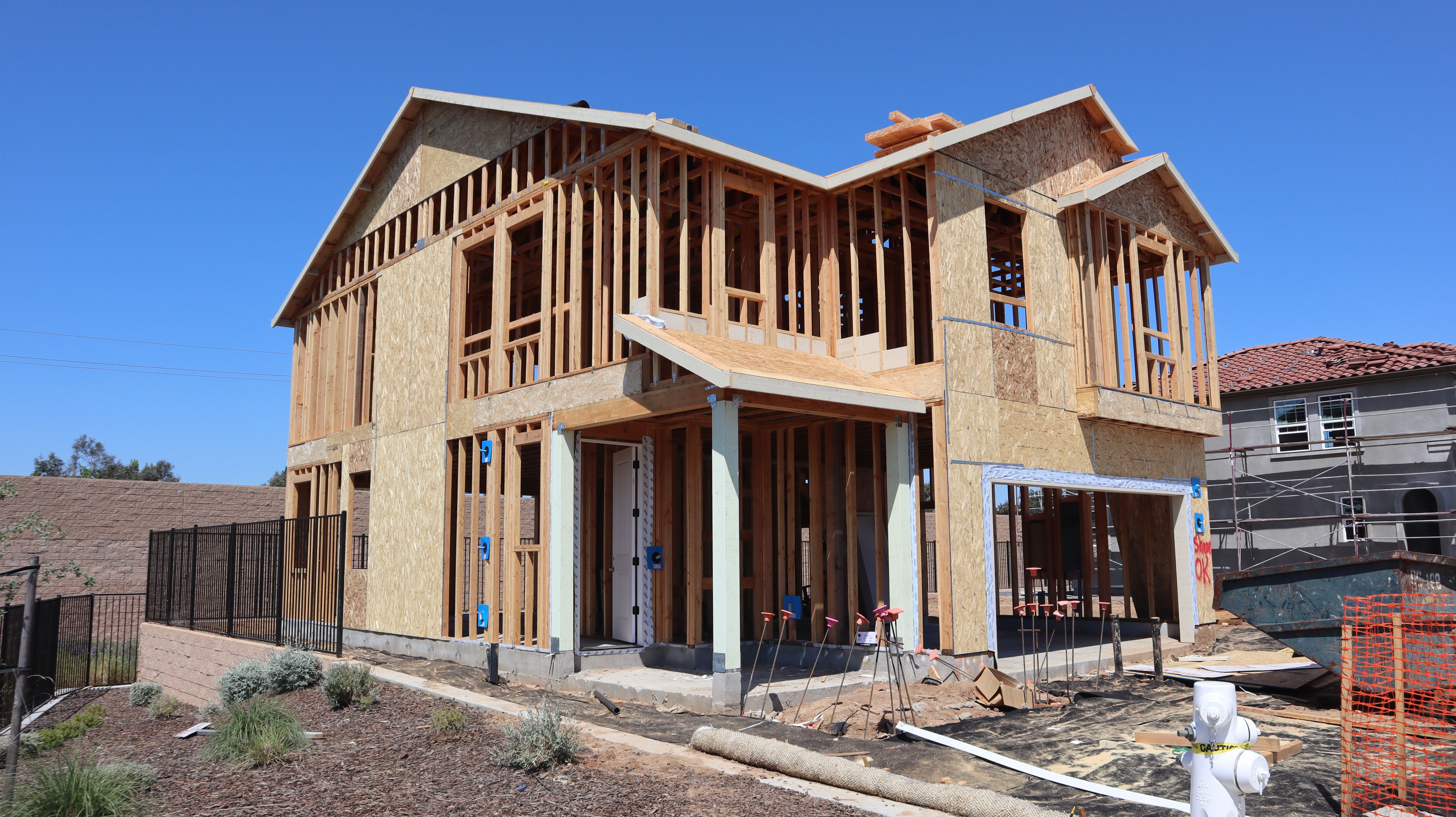
What does a drop in refinance applications mean for homeowners and new-construction buyers?
It means fewer people applied for a refinance that week — not that home equity or a new-construction purchase is off the table. If replacing your first mortgage is not the better fit, a HELOC or home equity loan can leave that loan in place. If you are shopping a newly built home, October's construction report was mixed, and incentives are still worth comparing on paper. Turn Times, a licensed mortgage broker (NMLS #2099552), compares options from participating wholesale lenders.
Key facts
- The Mortgage Bankers Association reported a 2.3% decline in total mortgage application volume for the week ending November 13, 2026, according to Mortgage News Daily. Purchase applications fell 3% on a seasonally adjusted basis, and refinance applications fell 2%. On an unadjusted basis, purchase activity was down 7% for the week. (Mortgage News Daily, Nov 20, 2026)
- Compared with a year earlier, purchase applications were 18% lower and refinance applications were 54% lower. The refinance share of total applications was 41.1%, and adjustable-rate applications accounted for 10.8% of activity. MBA attributed the weekly pullback to higher rates that week. Those are national survey results, not a quote from Turn Times, and not a forecast. (Mortgage News Daily, Nov 20, 2026)
- October's residential construction report, also covered by Mortgage News Daily, was mixed. Housing starts rose 9.9% to a seasonally adjusted annual rate of 1.309 million, 2.8% above October 2025. Building permits fell 7.4% to 1.295 million, 8.7% below a year earlier. Single-family authorizations dropped 8.7%. Completions rose 6.5% but were still 10.4% below October 2025. (Mortgage News Daily, Nov 20, 2026)
- A refinance replaces your first mortgage. A HELOC or home equity loan is usually a second lien, so the first loan can stay in place. (CFPB: what is a HELOC?)
- Turn Times may charge an origination fee. All fees are disclosed on your Loan Estimate or, for a HELOC, in the lender's HELOC disclosures.
- Timelines vary by lender, property, appraisal, and underwriting.
When refinance demand is soft, home equity is still worth comparing
A decline in refinance applications is a volume statistic. It does not tell you whether a refinance, a HELOC, or doing nothing is the better fit for your loan and your goal.
For some homeowners, a rate-and-term refinance is still the comparison to run, especially if the goal is to change the rate, the term, or the loan type. For others, the first mortgage already has terms they would rather keep. In that case, a HELOC or a home equity loan can use equity without replacing that loan. A cash-out refinance is the option that replaces the first mortgage and pays cash from equity.
Interest on a HELOC is typically variable. Available amounts depend on the home's value, what you already owe, and the lender's combined loan-to-value and income guidelines. See HELOC vs. cash-out refinance, how much you can borrow with a HELOC, and keeping your first mortgage and tapping equity with a second.
Friday, November 20, brought a mid-day move lower in mortgage rates after the application week described above. That one-day move is not a forecast. If you want a plain-English way to compare a refinance with a HELOC after rates move, see rates moved: refinance or HELOC.
October construction: more starts, a thinner permit pipeline
Builders began more projects in October, but fewer new permits were issued, especially for single-family homes. Mortgage News Daily noted that divergence as a sign of less momentum in the future pipeline, even as starts and completions rebounded that month.
National construction figures do not describe any one community, builder, or house. They are context for buyers who are already shopping new construction: it can still be reasonable to ask what the builder will move on, and to get every concession into the purchase contract.
We published a longer guide on November 18 about how to negotiate on a new-construction home, including price, closing-cost credits, rate buydowns, upgrades, and lot premiums, and how to compare a builder's financing offer on Loan Estimates. If a builder is offering a temporary or permanent rate buydown, see temporary vs. permanent rate buydowns.
How to use this data without overreading it
- Treat the MBA week and the construction report as national snapshots, not a prediction for your street or your loan.
- If you already have a first mortgage you want to keep, compare a second lien with a cash-out refinance before you decide.
- If you are shopping new construction, ask for the dollar value of each incentive and compare Loan Estimates. A price cut, a credit, and a buydown can look alike on a flyer and work very differently on paper.
- Review your Closing Disclosure before you sign a purchase or refinance, and compare it with the Loan Estimate.
Related: Buy a home · Home equity · How to compare Loan Estimates · When to refinance · Mortgage broker vs. lender · Licensing and disclosures
This is general education. Terms, available amounts, and eligibility are set by each lender.
Common questions
If refinance applications are down, should I still compare a refinance?
You can. Application volume is a market statistic, not a decision about your loan. Compare current Loan Estimates for your scenario, including costs and how long you expect to keep the loan.
When is a HELOC a better comparison than a refinance?
When you want to use equity and prefer to leave your first mortgage in place. A refinance replaces that loan. A HELOC is usually a second lien. The better fit depends on your goal, your current terms, and the costs of each option.
Do falling housing permits mean I should wait to buy new construction?
Not by themselves. Permits describe the national pipeline, not a specific community. If you are already shopping a new home, it is still useful to compare price, credits, and financing incentives in writing.
Can a builder's incentive require me to use the builder's lender?
To get that particular incentive, sometimes yes. Ask what the incentive is worth with a different lender, then compare Loan Estimates. Our new-construction negotiating guide covers this in more detail.
Are HELOC rates fixed?
Typically, no. A HELOC usually has a variable rate. The lender's HELOC disclosures explain how the rate and payment can change.
Does Turn Times lend the money or build homes?
Neither. Turn Times is a licensed mortgage broker, not a lender and not a builder. We compare options from participating wholesale lenders. The lender you choose underwrites and funds the loan.
Next step
Want to compare a refinance, a home equity option, or a builder's financing offer? Schedule a Loan Options Consultation at /schedule or call 844-999-8876. A consultation is a no-obligation educational conversation, not a credit decision.
Sources
- Mortgage News Daily: Mortgage Applications Dip 2.3 Percent as Rates Bounced Back (Nov 20, 2026)
- Mortgage News Daily: Construction Activity Still Above Pre-Pandemic Levels (Nov 20, 2026)
- CFPB: What is a home equity line of credit (HELOC)?
- CFPB: What is a Loan Estimate?
- CFPB: What is a Closing Disclosure?
Just Homes Inc. dba Turn Times · NMLS #2099552 · CA DFPI Financing Law License #60DBO-181268 · CO Mortgage Company Registration #2099552 · Equal Housing Opportunity Loans made or arranged pursuant to a California Financing Law license. Verify licenses at NMLS Consumer Access (nmlsconsumeraccess.org).