
Mortgage broker vs. lender vs. bank: what's the difference?
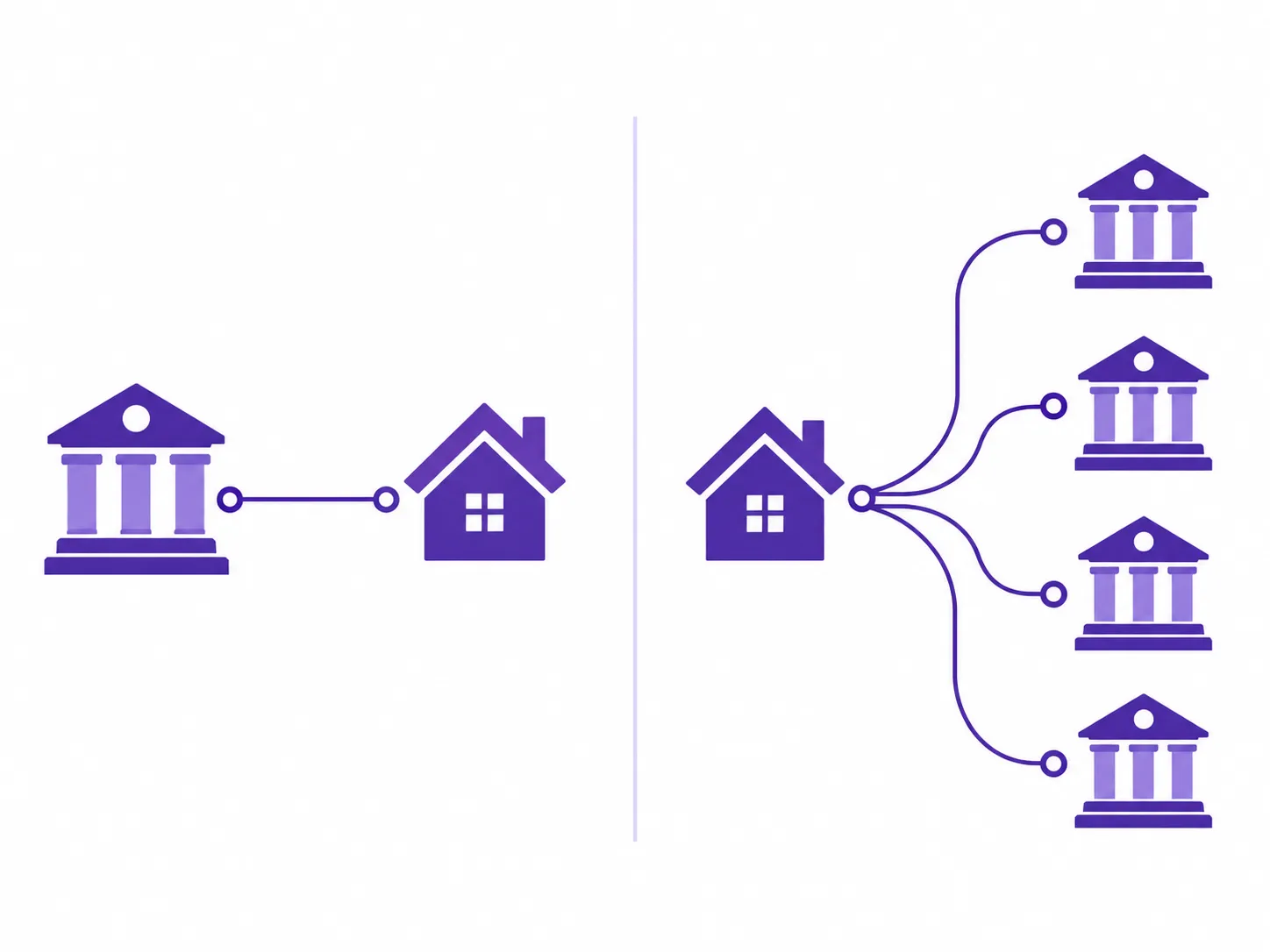
A mortgage lender, including many banks, funds the loan and makes the underwriting decision. A mortgage broker does not lend money; the broker helps you compare options from multiple lenders. Turn Times, a licensed mortgage broker (NMLS #2099552), shops participating wholesale lenders for borrowers in California and Colorado. The lender you choose underwrites, approves, locks, and funds. Turn Times may charge an origination fee. All fees are disclosed on your Loan Estimate.

Key facts
- Broker: an intermediary who shops multiple lenders and does not fund the loan.
- Direct lender / bank: offers and funds its own products; you apply to that institution.
- Some companies act as both in different channels, so ask which role they play on your file.
- A broker comparison does not guarantee a lower rate, lower fees, or a faster close.
- Always compare full Loan Estimates: rate, APR, origination charges, credits, and third-party fees.
Side-by-side comparison
| Topic | Mortgage broker | Direct lender / bank | |---|---|---| | Role | Arranges and shops options | Makes the loan | | Product menu | Multiple participating lenders | That institution's products | | Who underwrites and funds | The chosen lender | The same institution (typically) | | Day-to-day contact | The broker's loan officer | The lender's loan officer or portal | | Fees | May include broker origination; disclosed on the Loan Estimate | Lender origination and related charges on the Loan Estimate | | Often a fit for | Wanting several options in one workflow | Preferring one known institution |
This table is educational. Your experience depends on the companies involved.
What the CFPB emphasizes
The CFPB explains that a lender makes loans directly, while a broker does not lend money and is paid for arranging the loan. The CFPB also encourages shopping for loan terms and fees whether you use a broker or a direct lender.
Ask early:
- Are you a broker, a lender, or both on this transaction?
- Who pays your compensation, and how will it appear on my Loan Estimate?
- Which lenders or products am I eligible to see?
Pros and trade-offs
Working with a broker
Potential upsides
- Access to multiple wholesale programs without separate full applications everywhere.
- Helpful when guidelines differ, such as self-employed documentation or certain non-QM and investment products.
- One coordinator across pricing, conditions, and closing logistics.
Trade-offs
- An extra party in the chain; communication quality depends on the broker.
- Broker compensation should be understood and compared on the Loan Estimate.
- Some retail-only offers aren't available through wholesale.
Working with a bank or other direct lender
Potential upsides
- A direct relationship with the funding institution.
- Possible relationship pricing if you already bank there (ask; not guaranteed).
- A "one roof" process that can suit straightforward files.
Trade-offs
- You only see that lender's products unless you shop other lenders yourself.
- Specialty products may be more limited than what is available across several wholesale lenders.
How Turn Times fits
Turn Times (Just Homes Inc.) is a licensed mortgage broker, not a lender. We compare loan options from participating wholesale lenders for California and Colorado borrowers. We do not approve, lock, or fund loans; the selected lender does. We may charge an origination fee. All fees are disclosed on your Loan Estimate. Timelines vary by loan type, lender and file.
How to choose
No single channel is right for everyone. Look for:
- Active licenses (NMLS Consumer Access; DFPI for California entities as applicable).
- Clear fee explanations before you apply.
- Written Loan Estimates with matching assumptions when you compare.
- Responsive communication and a documented process.
Next step
Schedule a Loan Options Consultation or call 844-999-8876 to talk through whether a broker path or a direct-lender path fits your California or Colorado scenario. Educational only, not an offer of credit or a promise of approval.
Sources
- CFPB: What's the difference between a mortgage lender and a mortgage broker?
- CFPB: How does a mortgage loan officer or broker get paid?
- NMLS Consumer Access.
- California DFPI licensing resources.
Internal links: /about, /loan-options, /faq, /legal, /schedule, /insights/what-is-a-wholesale-mortgage-broker, /insights/how-mortgage-brokers-get-paid
Just Homes Inc. dba Turn Times · NMLS #2099552 · CA DFPI Financing Law License #60DBO-181268 · CO Mortgage Company Registration #2099552 · Equal Housing Opportunity Loans made or arranged pursuant to a California Financing Law license. Verify licenses at NMLS Consumer Access (nmlsconsumeraccess.org).